I have a confession that will probably get my fantasy writer card revoked: I don't care about magic systems.
I mean — I care about them the way I care about plumbing. I want them to work. I want them to not leak. I want to be able to flush the toilet without thinking about fluid dynamics. But I don't want to read about fluid dynamics while I'm in the middle of an emotionally devastating love scene, and I definitely don't want to write about it.
This is a problem when you're writing a fantasy trilogy that runs on magic.
The solution I landed on was accidental, like most of the good decisions in my life. I stopped trying to build a magic system and started building a psychology. The magic in my world doesn't operate like a set of rules. It operates like trauma. Like memory. Like the things your body knows that your mind has spent years trying to forget.
And that changed everything.
The Ocean and the Drowned Woman
The worldbuilding in the Anamnesis Trilogy rests on a distinction that took me three drafts and one nervous breakdown to articulate clearly: the difference between the Source and the Eighth Beast.
The Source is the primal void — the raw substrate of reality. It's not evil. It's not good. It's not anything, really, in the way that the ocean isn't anything. It just is. Everything came from it. Everything returns to it. It doesn't think. It doesn't want. But if you fall in, it will drown you without noticing.
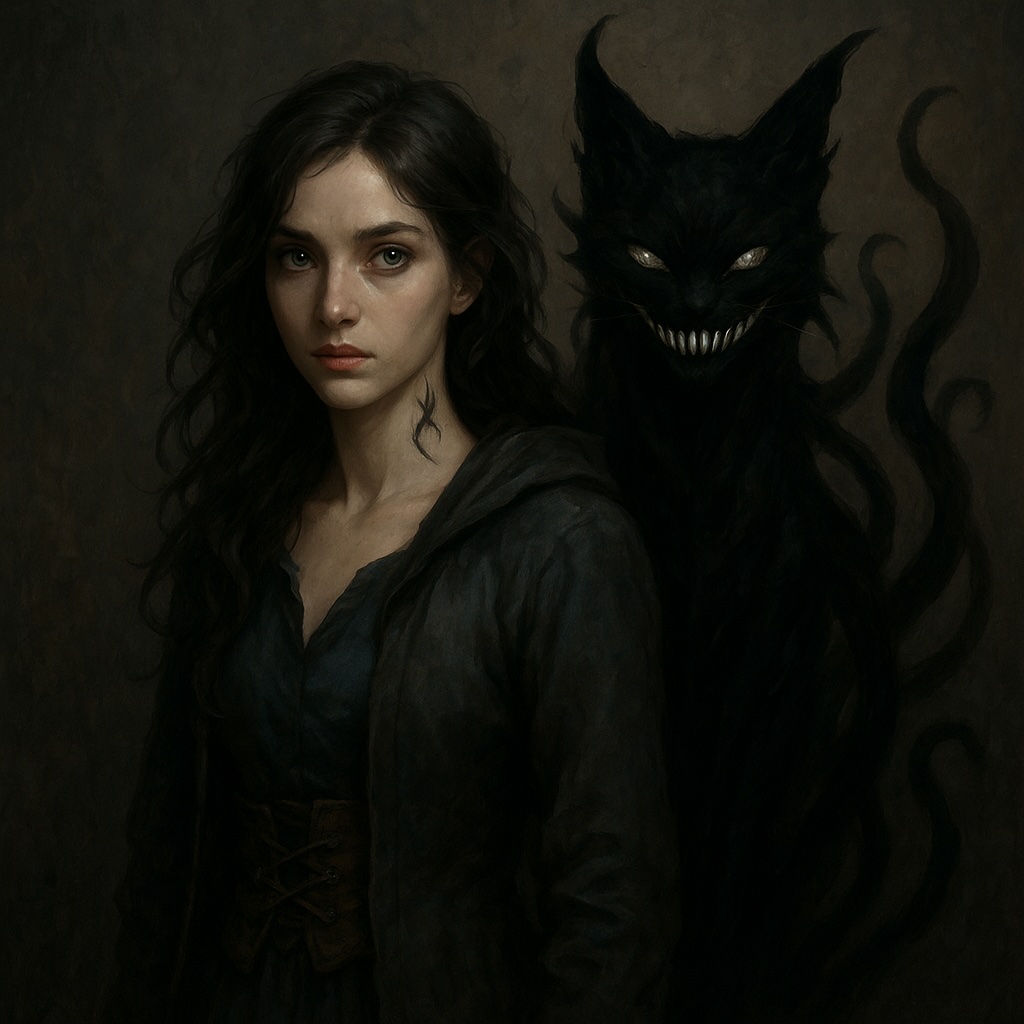
The Eighth Beast is a woman who walked into that ocean six hundred years ago and never came back.
Not because the ocean swallowed her. Because she couldn't let go. And the ocean couldn't let go of her. What emerged wasn't human anymore, and it wasn't the void either. It was something new. Something that had never existed before and was never supposed to.
Here's why this distinction matters for storytelling: if your cosmic threat is an impersonal force, your protagonist is fighting the weather. That's compelling but abstract. If your cosmic threat is a person — transformed, consumed, barely recognisable but still in there somewhere — then your protagonist isn't just fighting for survival. She's fighting a mirror.
Because the Eighth Beast isn't a monster my protagonist needs to defeat. It's a version of what she might become. The same bloodline, the same power, the same dangerous pull toward the Source. The beast at the end of the story is the protagonist at the end of a different choice.
That's not a magic system. That's a character arc wearing a monster's face.
Why Magic Should Hurt
There's a trend in fantasy worldbuilding that I think of as the “mana bar” approach. Magic has a resource pool. You spend it, you recharge, you spend it again. It's elegant. It's gameable. It maps beautifully onto spreadsheets and RPG mechanics.
It also bores me to tears.
Not because it's wrong — Brandon Sanderson has built a cathedral out of systematic magic and it's extraordinary — but because it doesn't do what I need magic to do in my story. I don't need magic to be a tool. I need it to be a wound.
In Anamnesis, magic costs you something you can't get back. Not mana. Not energy. Memory. Identity. The boundary between where you end and the power begins. Every time my protagonist reaches for magic, she's reaching into something that wants to absorb her. And every time she pulls back, she leaves a little of herself behind.
This isn't a mechanical cost. It's a psychological one. And it means that every magical escalation in the plot is also an escalation in the character's internal crisis. She's not just getting more powerful. She's getting less herself. The question isn't “does she have enough power to win?” The question is “will there be anyone left to celebrate if she does?”
I stole this idea from real life, honestly. From the way grief works. The way trauma works. The way you can survive something and come out the other side and look in the mirror and think: I don't recognise this person. Magic, in my world, is just a literalisation of what it feels like to be changed by something bigger than you.
Beasts as Bonded Trauma
The beast-bond system grew out of a question I couldn't stop asking: what would it feel like to share your body with something that isn't human?
Not in a horror way. In an intimacy way.
My protagonist is bonded to Scythe — an ancient, sardonic, deeply complicated beast who lives inside her bond mark and communicates through a connection that's part telepathy, part emotional bleed, part the worst roommate situation in literary history. He's not a pet. He's not a weapon. He's a relationship. With all the mess and negotiation and mutual dependence that implies.
I wanted the beast bond to feel like the relationships we have with the parts of ourselves we can't control. The anger that surges before we can stop it. The grief that ambushes us in the cereal aisle. The desire that doesn't care about our carefully constructed boundaries. Scythe is all of those things — externalised, given a voice, given opinions.
The magic system works because the beasts aren't mechanisms. They're characters. They have desires that conflict with their rider's desires. They have memories that predate their rider's lifetime. They have loyalties that don't always align with what's convenient.
And the bond itself — the glyph that connects rider to beast — functions like an attachment style. Some bonds are secure: rider and beast in genuine partnership, each holding a piece of the pattern. Some are anxious: the rider reaching too hard, the beast pulling back. Some are avoidant: the beast offering power without intimacy, the rider taking it without ever truly opening.
I didn't plan any of this. I just started writing a girl arguing with the voice in her head and realised I was writing about what it feels like to live with the parts of yourself you haven't integrated yet.
Therapy, basically. With more fire.
The Architecture of the Invisible
One more thing about magic systems, and then I'll stop pretending this is a craft essay and admit it's a love letter to the act of worldbuilding.
The physical architecture in my world is also magic. Buildings are texts. Walls are spells. The Spire where the Trials take place isn't just a setting — it's a glyph, a magical construct so large the characters are living inside it without knowing they're being read.
This came from my academic work on the semiotics of space — the idea that the buildings we inhabit shape the way we think, the same way sentences shape the way we read. I wanted a fantasy world where that relationship was literal. Where walking through a doorway could change your cognition. Where the architecture wasn't backdrop; it was plot.
The magic system, the beasts, the architecture, the Source — they're all the same thing, really. They're all ways of asking: what shapes us without our knowledge? What scripts are we performing that we didn't write? And what happens when we finally see the walls we've been living inside?
That's the real taxonomy. Not void versus beast, not seal versus Bleed, not source versus symptom.
The real taxonomy is: what do we carry, and what carries us?
The Practical Bit (For the Writers in the Room)
If you're building a magic system and it feels mechanical, try this: stop asking “what can this magic do?” and start asking “what does this magic cost?”
Not in mana. Not in energy. In selfhood. In identity. In the things your character cares about most.
Because a magic system where the cost is abstract (tiredness, depletion, nosebleeds) will always feel like a game mechanic. A magic system where the cost is personal — where every use of power forces the character closer to a version of themselves they're afraid of becoming — that's not a system. That's a story engine.
And story engines, unlike magic systems, never run out of fuel.
They run on the thing that's infinite: the human terror of becoming someone we don't recognise.
Cheerful stuff for a Tuesday, I know. But I never promised you optimism. I promised you fire.
The Anamnesis Trilogy is a dark romantasy about power, memory, and the architecture of the self. Book One is coming soon. If you want to argue with me about magic systems or Nietzsche or whether Scythe is secretly the best character (he is) — join the newsletter.
Join the Newsletter